Group Programs
Three groups. One framework. Each one a structured environment for people ready to do the work — not alone, but alongside others moving in the same direction.
12-Week Cohort
Per session · Commit to the full arc
Best for people ready to build over time
Drop-In
Per session · No commitment required
Try the work before joining a cohort
All sessions 90 minutes · Contact us to join an upcoming cohort or reserve a drop-in spot
Before capacity can be built and before agency can be returned, the nervous system needs a baseline. Rhythm is where that work begins — breath, body, and the slow return to safety.
↳ First AirOnce regulation is established, the work shifts to load. Controlled exposure, deliberate recovery, and the training of a nervous system that can take on stress without losing itself.
↳ The ThresholdSome work requires a specific container. The Weight Room is built for men carrying the particular load that comes with high-demand roles, identity, and the culture of not asking for help.
↳ The Weight RoomThe Groups
Each group has a name that earns its meaning inside the work — not a brand, not a concept. A container built for where that group begins and where it's headed.
"The breath that comes after."
First Air is a breathwork group built around a single premise: regulation starts before anything else. Before performance. Before exposure. Before growth. The breath is the most direct access point to the nervous system available to us — and most people have never been taught to use it deliberately.
Each 90-minute session introduces and deepens a specific breathwork practice — physiological sighs, box breathing, resonance frequency breathing, extended exhale protocols — with direct application to sleep, arousal regulation, performance under pressure, and the quiet recovery between hard things.
No prior experience. No performance expectation. Just presence and the willingness to practice.
"The cold is not the point. The response is."
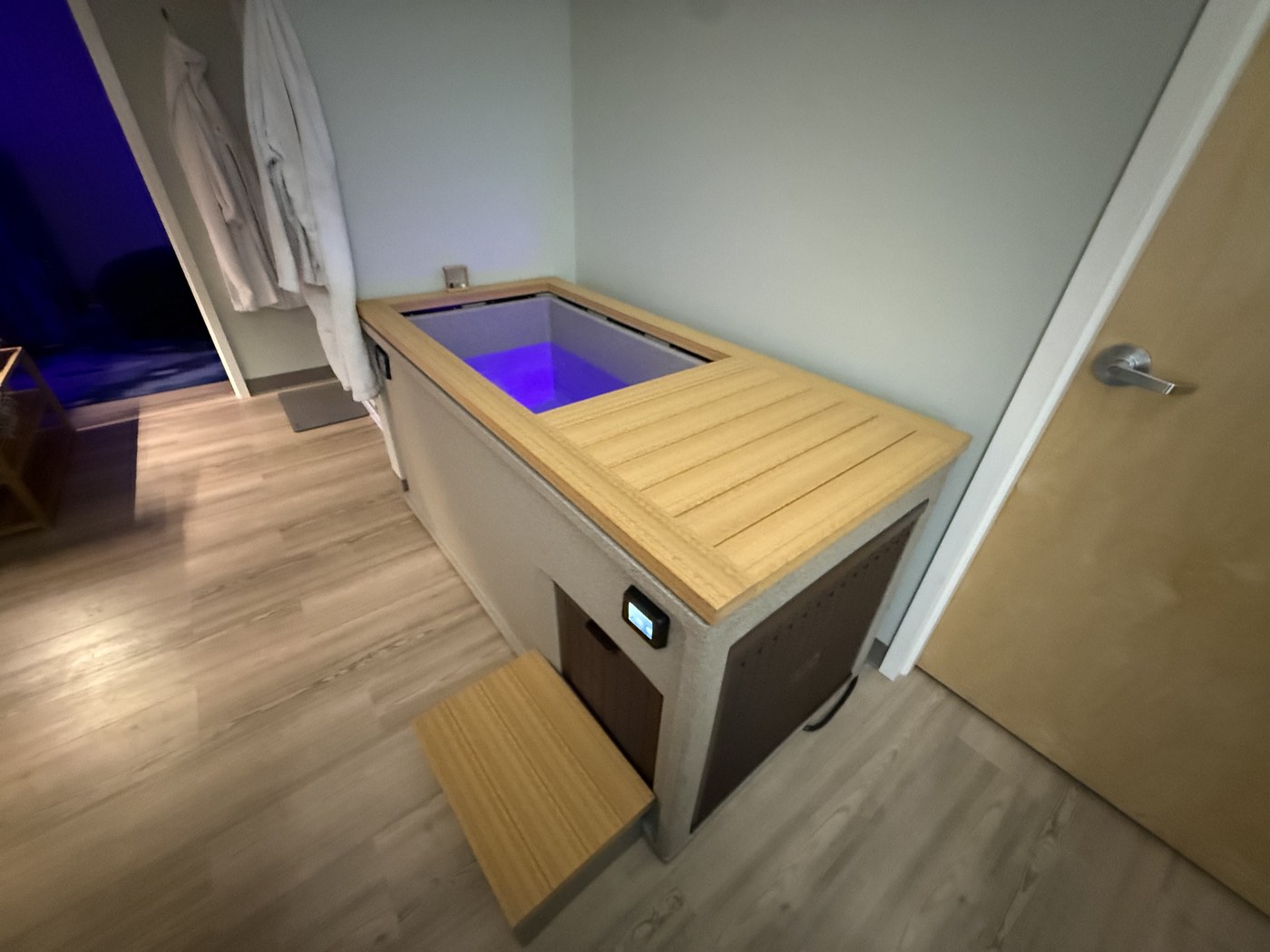
The Threshold combines deliberate cold exposure with structured mental performance training. The cold plunge is the tool — not a wellness trend, not a biohack. It is a controlled stressor used to build the kind of tolerance that transfers to every other hard thing.
Each session pairs cold exposure with cognitive performance work: attention control under duress, self-talk architecture, pre-performance routines, and the specific mental skills that keep people functional when the pressure is real. You learn what your nervous system does at the edge — and then you train a different response.
The Threshold is for people who want to know what they're made of. And who are ready to have a say in the answer.
"Not the gym. The other one."
The Weight Room is a closed group for men navigating the intersection of performance, identity, and the specific kind of weight that doesn't show up on any scale.
Veterans. First responders. Fathers. Executives. Men who have spent years being the person others lean on — and who have rarely had a structured space to set that down, look at it honestly, and figure out what to do with it. This is not therapy. It is facilitated group work with a clear framework, direct conversation, and the kind of accountability that only happens among men who have decided to show up for each other.
The work moves through both Rhythm and Capacity — because most men in this room need both regulation and the slow rebuilding of tolerance for their own internal experience.
The Case for Group Work
Groups are not a lesser alternative to individual care. For many people, the group is the more powerful environment — because the work happens in relationship, not just reflection.
The nervous system learns from co-regulation — the experience of being in a regulated space alongside regulated others. Group creates that condition deliberately and repeatedly, in a way no individual session can.
Many people in high-demand environments feel deeply alone in what they carry. Being in a room with others who understand the terrain — without needing to explain it — changes something that explanation cannot reach.
A 12-week cohort creates a structure that holds you inside the work. Showing up consistently — to the same people, in the same container — builds a kind of commitment that solo practice rarely matches.
The group itself is a practice ground — for regulation under social load, for presence, for giving and receiving. What is practiced here does not stay in the room. It transfers to the places that matter most.
Inside a Session
Every session follows the same structure. The container is predictable — because predictability is itself a nervous system input.
What changes week to week is the content — the practice, the depth, the place in the arc. What doesn't change is the shape of the hour and a half. You always know where you are inside it.
Drop-in participants follow the same structure. Cohort members build on it week over week, with between-session practice to sustain momentum outside the room.
Reserve a SpotA brief structured check-in — current state, arousal level, what you're bringing into the room. Calibration, not processing. The nervous system needs to know where it's starting.
Every session opens with a guided practice specific to the group — breath protocol, body scan, or pre-exposure preparation. Nervous system first. Always.
The primary work of the session — practice, instruction, cold exposure, or structured group process — facilitated with clinical intention and the group's arc in mind.
A structured close with individual reflection. You leave with something specific to carry forward — not just something you went through.
Cohort members receive a brief, specific between-session practice each week. The work doesn't stop at the door.
Clinical Foundation
Every group at Cadence is facilitated by Jason Culbreth, LPC — a licensed clinician with EMDR certification, trauma-informed training, and direct lived experience in the populations these groups are built for.
That distinction matters. A clinically facilitated group can hold complexity that peer-led groups cannot. It can move at the right depth, respond to dysregulation in real time, and keep the container intact when the work gets hard — which it will.
These groups are not clinical therapy. They are structured, clinically informed group experiences. Whether you are working with Jason individually or coming to groups on their own, the framework is the same: Rhythm before Capacity. Capacity before Agency. The sequence is not optional.
About Jason →"The nervous system learns regulation in relationship. Individual work builds the foundation. Groups prove you can hold it when it matters."
— Jason Culbreth, LPC · Founder, Cadence Wellness
Tell us which group interests you. We'll get you the schedule and hold your spot.