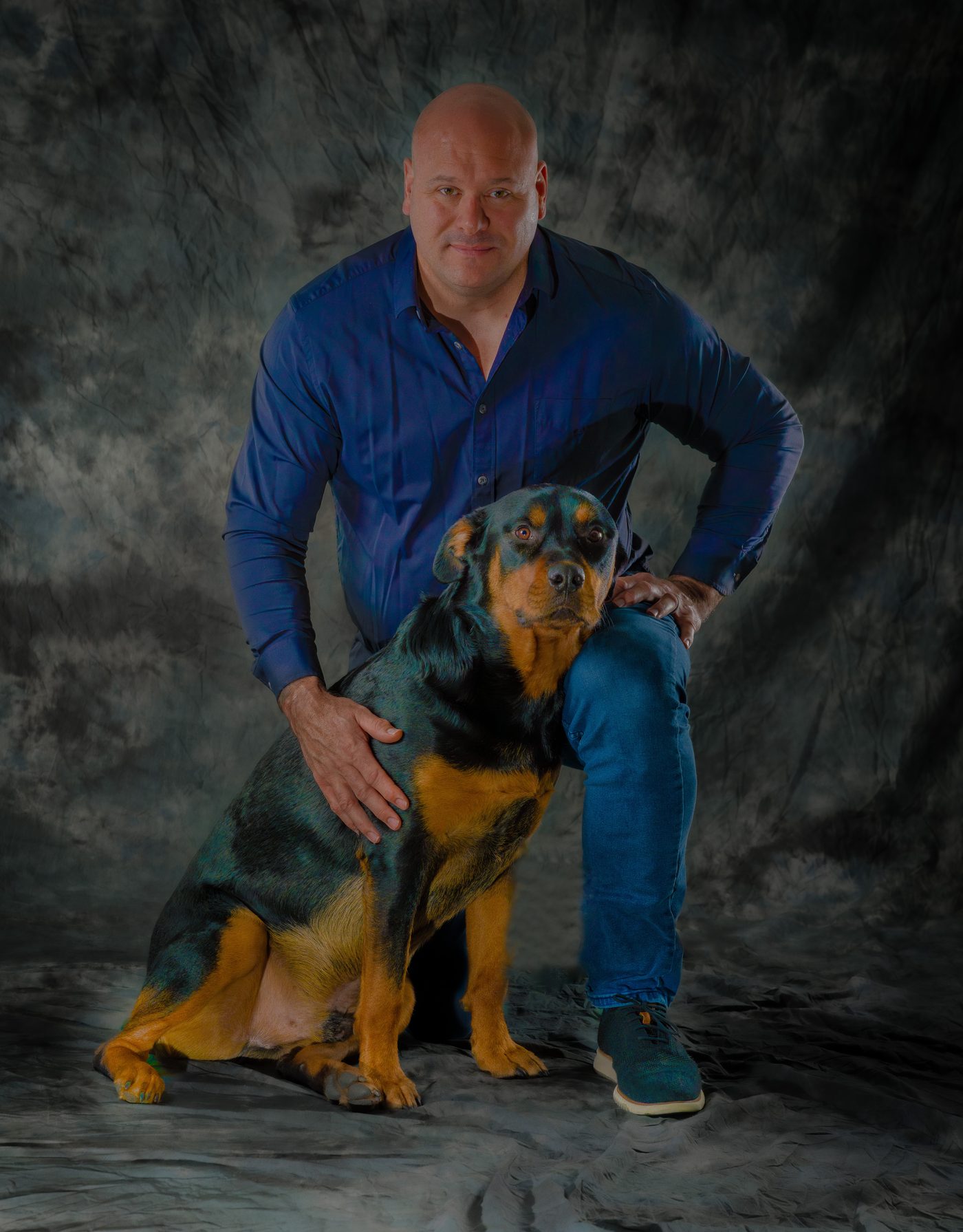
Navy Special Operations veteran. Retired firefighter. Licensed Professional Counselor. EMDR-certified therapist. He built Cadence because the system he needed didn't exist.
Jason Culbreth spent years in environments that demanded everything from the nervous system — and offered very little structure for what came after. Military service in Navy Special Operations. Years in the fire service as a first responder. And eventually, a path into clinical work that began, in part, because he started trying to answer questions about what he had experienced and what he had seen others carry.
The question that kept returning was not "what is wrong with people?" It was: "Why do so many capable, high-functioning people lose their rhythm — and what does it actually take to find it again?"
Cadence is the answer he built.
The Cadence system is not theoretical. It is the distilled product of lived experience across three demanding professional contexts — each of which shaped Jason's understanding of what the nervous system can do, and what it needs to recover.
Service in Navy Special Operations instilled the physiological and psychological baseline that shapes Cadence's approach. High demand, high performance, and a culture that rarely acknowledged the cost. The experience created fluency in stress — and in what the absence of recovery structure does over time.
The fire service extended Jason's understanding of cumulative occupational trauma — the compounding toll of shift work, acute stress exposure, and a culture built around moving forward without processing. He retired carrying knowledge that would inform how Cadence approaches this population, which is among the most underserved in clinical mental health.
Jason's clinical training added structure to experience. Licensure as an LPC and certification in EMDR provided the formal framework to translate what he understood intuitively — and what he had seen across two demanding careers — into evidence-based clinical practice. He has since worked extensively with veterans, first responders, and high-stress professionals navigating the terrain he once navigated himself.
Cadence Wellness opened in Danbury, CT as the culmination of these three contexts — a facility designed to provide what Jason had been missing and what he had been trying to give others: a clear, structured, trauma-informed pathway from dysregulation to full function. Not a spa. Not a traditional therapy office. Something the region had not seen before.
The phrase "humans don't break, they lose rhythm" is not motivational language. It is a clinical and experiential observation rooted in how the nervous system actually works.
The nervous system is adaptive. Under sustained stress, it adapts to the stress. It reorganizes around threat, around hypervigilance, around protection. That reorganization looks like anxiety, numbness, reactivity, exhaustion, avoidance, and disconnection — but it is not brokenness. It is the nervous system doing exactly what it was designed to do.
The problem is that most people get stuck there. The stress passes — or changes form — but the physiology doesn't update. The rhythm is lost. And without a clear, structured path back to regulation, capacity, and agency, people stay stuck — sometimes for years.
"The work is not to fix people. It is to restore the rhythm they lost — and build the capacity to keep it."
Cadence is built on the belief that this restoration is possible, that it follows a predictable sequence, and that it is most effective when clinical therapy, deliberate recovery, and progressive physiological training work together within a single coherent system.
Cadence Wellness is designed to be a model — not just a practice. A demonstration that clinical therapy, nervous system training, and performance recovery can be integrated under one roof, within one framework, without losing the integrity of any part.
The long-term vision is a facility where veterans, first responders, athletes, and high-stress professionals have access to a complete nervous system ecosystem — clinical support, physiological training, and a professional community that understands the terrain.
What exists today is the foundation. The system is already in place. The tools are available. The pathway is clear.
A facility built by one of them, for the reintegration challenge that most systems were not designed to address.
A place that doesn't pathologize occupational strain — and doesn't pretend it doesn't exist.
A structured pathway back — built on clinical foundation, not wellness trends.
Start with a conversation. No commitment required — just an honest assessment of where you are and whether Cadence is the right environment for what you need.